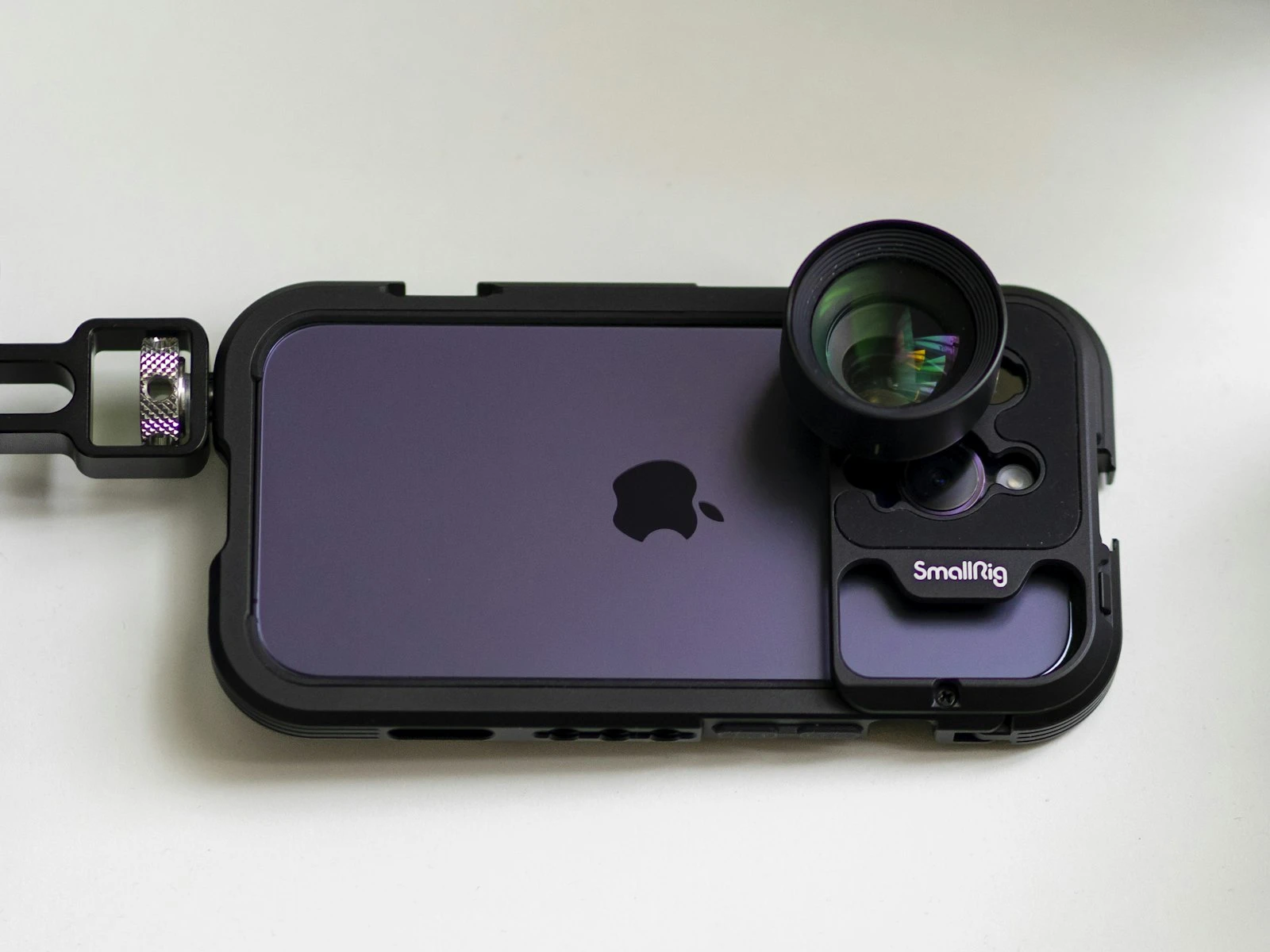
The better question is when a phone is actually the right choice.
And the honest answer is more often than camera enthusiasts like to admit.
Understanding when each tool makes sense matters, and it's one of the most honest discussions in our phone photography guide, because there are genuine situations where your phone has real advantages. This guide mentions terms like HDR, depth of field, and sensor size. If any of those are unfamiliar, you can look them up in the photography glossary.
The Obvious: It's Always With You
This is so obvious it gets dismissed, but it's actually profound.
The camera you have with you beats the camera you left at home. Every time. A phone that's in your pocket can capture a moment that a DSLR at home cannot.
But beyond mere presence, "always with you" carries real practical meaning.
No commitment required. You don't have to decide in advance that today is a photography day. Opportunities present themselves constantly.
No encumbrance. Nothing to carry, nothing to secure, nothing to worry about in crowds or weather.
No performance anxiety. Walking around with a camera announces "I am photographing." A phone is invisible, and everyone has one out constantly.
No opportunity cost. Carrying camera gear means not carrying something else, or having less mobility. Phones eliminate this tradeoff.
This fundamentally changes what you can photograph.
Speed to Capture
Modern phones can go from pocket to capturing in seconds, and that speed matters.
Against phones: You have to wake the screen, launch the camera, frame, and shoot.
Against dedicated cameras: You have to turn it on, wait for it to boot, possibly remove a lens cap, raise it to your eye, focus, and shoot.
In practice, phones often win. The camera app launches instantly. The processing happens quickly. By the time you'd be raising a DSLR to your eye, the phone shot is captured.
For spontaneous moments, fleeting expressions, or quick documentation, this speed advantage is real.
Computational Photography Wins
Phone processing can achieve results that would require significant post-processing with a dedicated camera, or wouldn't be possible at all.
HDR That's Instant
Phone HDR automatically captures and blends multiple exposures in a fraction of a second. The result is an image with good highlight and shadow detail, ready to use.
With a dedicated camera, you'd need to bracket exposures, align them in software, and merge them, a workflow that takes minutes or hours.
For backlit subjects, high-contrast scenes, and tricky exposures, phone HDR delivers good results with zero effort.
Night Mode
Modern phone Night Mode combines multiple frames over several seconds, producing low-light results that would require a tripod and long exposure with a dedicated camera.
For casual night photography where you don't want to carry a tripod, phones can capture scenes that would be impossible otherwise.
Focus Stacking
Some phones automatically capture and blend focus at multiple distances for macro shots, achieving front-to-back sharpness that would require specialized technique with traditional cameras.
Portrait Mode
While phone portrait mode has limitations, it simulates shallow depth of field without the need for wide-aperture lenses. For casual portraits where good-enough blur is acceptable, phones deliver instantly.
The Screen Advantage
Phone screens are large, bright, and always present. This changes how you compose and review.
Composing on Screen
Large screens make composition intuitive, especially for people who didn't grow up looking through viewfinders. You see exactly what you're capturing.
For overhead shots, low-angle shots, or any awkward position, the phone screen shows you the frame without requiring contortions.
Instant Review
The image appears on the same screen you used to compose it, in the same context, at the same moment. You can immediately evaluate and reshoot.
With dedicated cameras, review happens on a small back screen or much later on a computer. The feedback loop is slower.
Sharing From the Same Device
The photo moves from capture to editing to sharing without leaving your hand, with no file transfers, no separate devices, and no interruption in workflow.
For photography that's meant to be shared quickly, like social media, messaging, and quick documentation, this integration is a genuine advantage.
Specific Scenarios Where Phones Win
Beyond general advantages, here are specific situations where phones are often the better choice:
Quick Documentation
Need to capture a receipt, whiteboard, parking spot, or anything where the purpose is record-keeping rather than art? The phone wins every time with fast, easy, instantly accessible, searchable results.
Food Photography (Casual)
Restaurant lighting is often terrible for cameras. Phones handle it surprisingly well, and the social context of dining doesn't accommodate pulling out serious camera gear.
Travel (Light and Mobile)
When you're walking all day, moving through airports, or exploring places where camera gear would be a burden or security concern, phones keep you mobile and inconspicuous.
Children and Pets
They don't hold still. They don't wait for you to change settings. Phone speed and accessibility often beats camera capability.
Events Where You're Also a Participant
Weddings, parties, and gatherings where you're a guest. A phone lets you capture moments while participating. A camera changes your role from guest to photographer.
Street Photography
Phones are invisible. Everyone has one. You can capture candidly without the confrontational presence of a camera.
Backlit Subjects
Phone HDR handles backlighting remarkably well. Dedicated cameras often blow out backgrounds or silhouette subjects unless you're working carefully with exposure.
Any Situation Requiring Discretion
Places where cameras draw attention, security concerns, or simply social situations where being seen as "the photographer" would change the dynamic.
When Dedicated Cameras Still Win
To be fair, there are clear situations where phones can't compete.
Low Light (Beyond Casual)
Night Mode is impressive, but dedicated cameras with larger sensors capture cleaner, more detailed low-light images. For serious low-light work, bigger sensors win.
Subject Distance
Zoom on phones hits limits quickly. For wildlife, sports, or anything far away, optical zoom from proper telephoto lenses is unmatched.
Shallow Depth of Field
Portrait Mode simulates blur computationally. Real optical depth of field from fast lenses is more natural, controllable, and doesn't have edge detection failures.
Speed and Action
For serious sports, wildlife, or any fast action, dedicated cameras with fast autofocus, high burst rates, and proper tracking outperform phones.
Maximum Quality
When you need the highest resolution, cleanest files, and most flexibility in post-processing, larger sensors and RAW files from dedicated cameras are superior.
Creative Control
Manual control of aperture, shutter speed, ISO, and all other parameters is more accessible and complete on dedicated cameras.
Professional Expectations
Client work often requires the confidence and flexibility of professional equipment. The gear itself is part of the professional proposition.
The Real Question: What's the Photo For?
Instead of asking "phone or camera," ask "what's this photo for?"
For sharing on social media? Phone is probably sufficient and more convenient.
For printing large? Dedicated camera for best quality.
For documentation? Phone for convenience.
For artistic expression with maximum control? Dedicated camera.
For capturing a spontaneous moment? Whatever you have, probably the phone.
For professional delivery? Usually dedicated camera, but increasingly phones work for certain commercial applications.
The tool should match the purpose, because neither is universally better.
Phone Photography Is Real Photography
There's sometimes snobbery about phone photography, a sense that it doesn't "count" or that phone photographers aren't "real" photographers, but that attitude misses the point entirely.
Photography is about seeing, composing, and capturing. The tool matters, but the person behind it matters more.
Some of the most viewed, most impactful, most meaningful photographs of our era have been captured on phones. Photojournalism happens on phones. Art happens on phones. Memory preservation happens on phones.
A phone in skilled hands produces better photos than a professional camera in unskilled hands. The photographer matters more than the equipment.
Making the Choice
When deciding between phone and dedicated camera, consider:
Will I actually have the camera with me? If there's any chance you'll leave it behind, the phone wins by default.
Does this situation benefit from camera advantages? Low light, distance, speed, shallow depth of field? If yes, consider bringing the camera.
Does this situation benefit from phone advantages? Discretion, integration, speed to capture, computational features? If yes, the phone may be the right choice.
What's the purpose of these photos? Match tool to purpose.
Am I willing to carry and manage camera gear? Be honest with yourself.
For many photographers, the answer is both. Phone for everyday, camera for intentional sessions. Each tool for what it does best.
The Best Camera
"The best camera is the one you have with you" is incomplete.
A more complete version would be: "The best camera is the one you have with you, know how to use, and that suits the situation."
Sometimes that's a phone, sometimes it's a dedicated camera, and sometimes it's something in between.
Understanding when each tool excels helps you make better choices, and take better photos with whatever you're holding.
Frequently Asked Questions
Should I stop using my dedicated camera?
Use both, since each has strengths. The real question is which to use when.
Are phones good enough for professional work?
For some professional work, yes. Social media content, certain types of journalism, quick commercial documentation. For other professional work, no. It depends on the specific requirements.
Will phones eventually replace dedicated cameras?
For most people who currently use dedicated cameras casually, phones have already replaced them. For serious photographers who need specific capabilities, dedicated cameras will remain relevant, though the gap continues to narrow.
I shoot on my phone exclusively. Should I get a "real" camera?
Only if you find yourself consistently wanting capabilities your phone doesn't have, like better low light, longer reach, or more control. If your phone is meeting your needs, it's meeting your needs.
Key Takeaways
- Your phone wins when you need it instantly, when carrying a camera is impractical, and when discretion matters more than technical quality.
- Phones excel in good light, for social media output, for video, and for computational photography features like Night Mode and HDR.
- Dedicated cameras win for low light, shallow depth of field, action/sports, large prints, and any situation where manual control over settings matters.
- The best camera is the one you have with you and are willing to use, so learn your phone's strengths instead of only comparing its weaknesses.
More in This Guide
Continue improving your phone photography.