Your camera has two fundamentally different ways of handling autofocus. One locks focus and holds it. The other continuously adjusts as things move. Choosing the wrong one for your situation is one of the most common causes of missed focus.
This distinction is far from trivial. A photographer using Single AF for a child running toward them will miss focus every time. A photographer using Continuous AF for a carefully composed still life might watch in frustration as the camera refocuses the moment they recompose.
The good news is that the decision is usually straightforward once you understand what each mode actually does. You just need to ask whether your subject is moving toward or away from you. It's one of the foundational concepts in our sharp photos guide.
What Each Mode Actually Does
Before making the decision, you need to understand the fundamental difference in behavior.
Single AF: Focus Lock
Single AF (called One-Shot on Canon, AF-S on Nikon and Sony) focuses once when you engage autofocus, then locks. The focus distance stays fixed until you release the AF button and engage it again.
Think of it as point-and-lock. You tell the camera where to focus, it finds that distance, and it holds there no matter what happens next. This predictable, precise behavior is the entire point.
Continuous AF: Active Tracking
Continuous AF (called AI Servo on Canon, AF-C on Nikon and Sony) keeps adjusting focus for as long as you hold the AF button. If your subject moves closer or farther away, the camera tracks that movement and shifts focus to compensate.
Think of it as follow-and-adapt. The camera constantly measures distance and makes adjustments. It never truly locks. Modern systems predict where moving subjects will be a fraction of a second later, compensating for shutter delay. This predictive tracking is what makes sharp photos of fast-moving subjects possible.
Single AF: When and Why
Single AF excels in situations where you need focus to stay exactly where you put it.
Static Subjects
The obvious use case. Your subject is not moving, you have time to compose, and you need precise control over where focus lands.
Landscapes, architecture, products, food photography, still life, macro work, and formal portraits where your subject is holding a pose all qualify. Any situation where the distance between camera and subject will not change between focus and shutter is a good fit.
In these situations, Single AF eliminates variables. You focus, it locks, you shoot. No risk of the camera deciding to refocus on something else.
Precision Composition
Single AF enables a technique called focus-and-recompose. You place your focus point on the subject, lock focus, then move the camera to put your subject off-center while maintaining that locked focus distance.
This is essential for photographers who prefer placing subjects away from the center of the frame but do not want to constantly move their focus point. Focus on the eye, lock, shift the camera to put the subject on a third line, shoot.
Continuous AF makes this technique unreliable. When you recompose, whatever is now under your focus point becomes the new target. The camera refocuses, and your original subject goes soft.
When Predictability Matters
Some situations demand that you know exactly what your camera is doing. A wedding ceremony where you cannot risk focus hunting. A product shot where autofocus shifts would be visible. Single AF gives you certainty because it does what you tell it, when you tell it.
Portrait sessions often fall here too. Your subject might shift slightly between shots, but you can ask them to hold still for each frame. Focus, they hold, shoot. Then refocus for the next composition.
Continuous AF: When and Why
Continuous AF becomes essential the moment your subject starts moving toward or away from you.
Anything That Moves Unpredictably
Children, pets, wildlife, athletes, dancers, and street performers all fall into this category. Anyone or anything that might change their distance from you without warning demands continuous tracking.
The key word here is unpredictably. A person walking parallel to you, moving across your frame from left to right, stays at roughly the same distance. That is not necessarily a Continuous AF situation. But a child running toward you? The distance changes with every step. Single AF cannot keep up.
Sports and Action
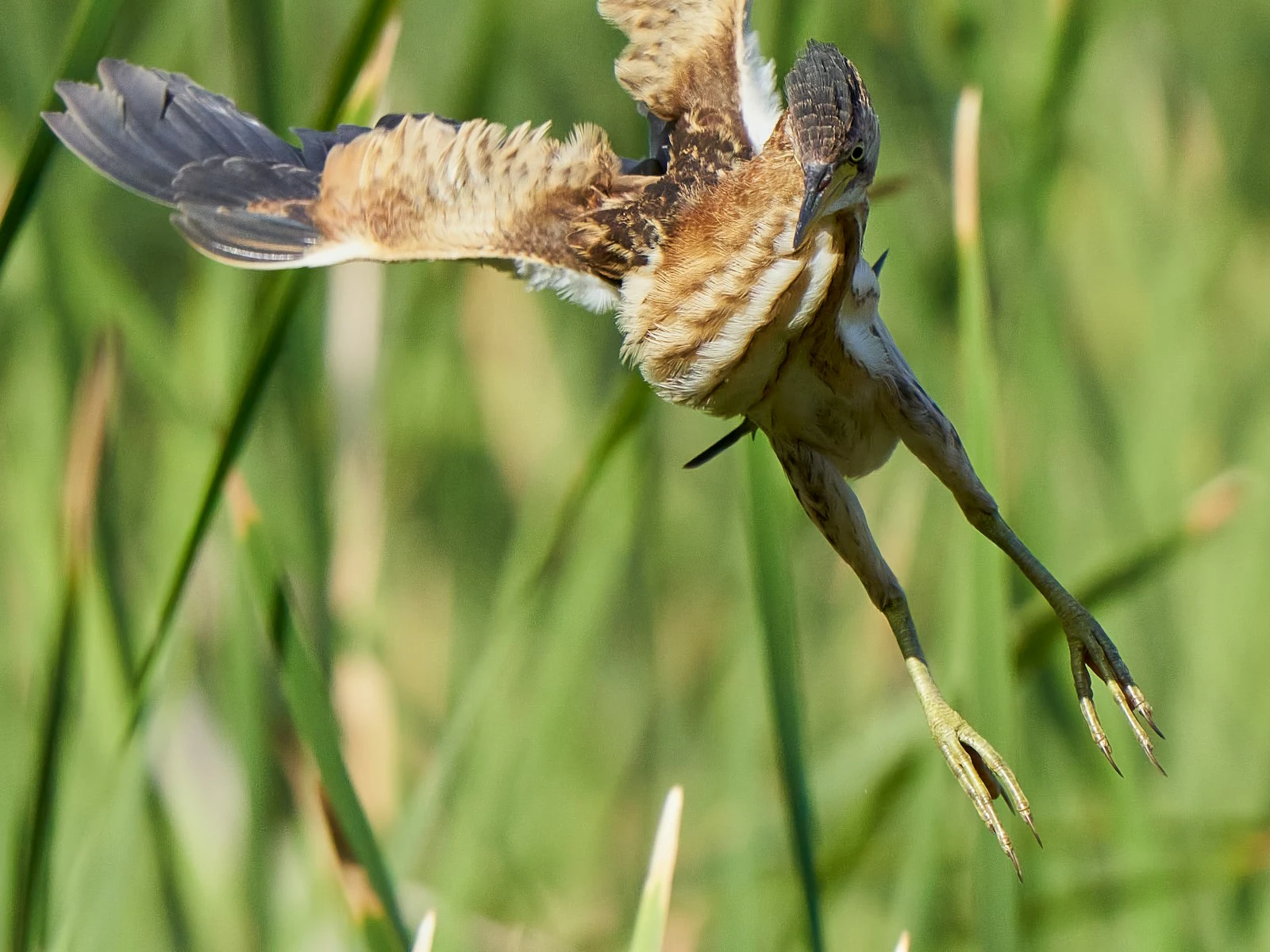
This is the classic Continuous AF domain. A basketball player driving toward the basket. A sprinter crossing the finish line. A bird swooping toward a branch. The distance is constantly changing, and you need the camera to track that change in real time.
Events and Wildlife
Wedding receptions, parties, and conferences all involve people moving in ways you cannot predict. Event photographers often stay in Continuous AF by default because missing a moment to refocus outweighs the benefits of locked focus.
Wildlife photographers face the same challenge. Animals do not take direction. A deer might be still one moment and bolting the next. Continuous AF with subject tracking maintains focus through unpredictable movement.
The In-Between Cases
Some situations are not obviously static or obviously moving. These require judgment.
People Who Might Move
This is perhaps the most common dilemma. You are photographing a person who is currently still but might shift at any moment. A guest at an event who is standing but chatting animatedly. A model who is posing but adjusting between shots. A family member who tends to lean forward when they smile.
There are two approaches worth considering.
Stay in Single AF and refocus frequently. Focus, shoot, release, focus again, shoot again. This works well if you are shooting deliberately with time between frames. You maintain precision at the cost of speed.
Use Continuous AF and keep tracking. Keep the AF engaged and let the camera handle any subtle movements. This works well for rapid shooting where the subject might shift unpredictably. You gain responsiveness but give up some control over exact focus placement.
Neither approach is wrong. Your choice depends on how likely movement is and how critical precise focus placement is for your shot.
The Sudden Moment
You are photographing a group portrait. Everyone is still. You are in Single AF. Then grandma laughs and leans forward. Or the toddler runs toward the camera.
Experienced photographers develop anticipation. You learn to read body language that precedes movement, like the coiling before a jump or the weight shift before a step. When you see those signs, switch to Continuous AF before the movement happens.
Candid vs Posed Within the Same Session
Many portrait sessions mix posed shots and candid moments between poses. The posed shots favor Single AF. The candid moments favor Continuous.
If you use back button focus, switching becomes seamless. Press and hold for continuous tracking. Press once and release for focus lock.
Common Mistakes with Single AF
Shooting Moving Subjects
The cardinal error. Your subject is approaching, you focus in Single AF, they move before you shoot, and your focus plane is now where they were rather than where they are. The telltale sign is photos where something at the original focus distance is sharp but your subject is slightly soft.
Not Refocusing After Movement
Your subject was still when you focused, then shifted slightly before you shot. At wide apertures, even small movements shift critical areas out of the focus plane. The fix is to refocus before each shot rather than assuming your previous focus is still valid.
Focus and Recompose at Wide Apertures
Rotating the camera after locking focus changes the distance between camera and original focus point. At narrow apertures, this slight change is within your depth of field. At f/1.8, it might not be. If shooting wide open, consider moving the focus point rather than recomposing.
Focus and Recompose in Continuous AF
If you recompose while Continuous AF is engaged, the camera refocuses on whatever ends up under your focus point. This is Continuous AF doing exactly what it is designed to do.
Common Mistakes with Continuous AF
Expecting It to Lock
Photographers new to Continuous AF sometimes focus, assume it is locked, and stop paying attention. Then the camera refocuses on something else. Continuous AF is never locked. It is always evaluating.
Not Understanding What It Tracks
Continuous AF tracks whatever is under your focus point or area. If your subject moves out of that area, the camera tracks whatever moves into it instead. Modern subject detection helps, but the tracking is sophisticated, not telepathic.
Shooting at the Wrong Moment
If you fire the shutter while the system is mid-adjustment, you might catch it between focus distances. Learn your camera's tracking behavior and wait for focus confirmation when possible.
Using It When Precision Is Critical
Continuous AF introduces the possibility of focus changing at any moment, a variable that Single AF eliminates. For macro photography or critical product shots, that variable is unwelcome.
Quick Decision Guide by Scenario
Here is a practical reference for common situations.
Studio portrait, subject holding pose: Single AF. Focus on the near eye, lock, shoot.
Environmental portrait, subject might shift: Either mode works. Single AF with frequent refocusing, or Continuous AF with the focus point on their face.
Group photo, everyone standing: Single AF. Focus on someone in the middle row, use an aperture that provides sufficient depth.
Wedding ceremony: Single AF for stationary moments. Continuous AF ready for movement (processional, recessional, first kiss).
Wedding reception: Continuous AF as default. Too much unpredictable movement for consistent Single AF use.
Child playing: Continuous AF. Children rarely hold still and direction changes are constant.
Pet portraits: Continuous AF unless the pet is unusually calm. Even then, be ready to switch.
Sports and action: Continuous AF. No question.
Street photography: Depends on your style. Zone focusing with Single AF for pre-focused shooting. Continuous AF for reactive shooting.
Landscape: Single AF. Nothing is moving toward or away from you.
Architecture: Single AF. Buildings are reliably stationary.
Product photography: Single AF with tripod. Precision matters, nothing is moving.
Macro: Single AF or manual focus. Continuous AF can hunt at close distances.
Bird in flight: Continuous AF with aggressive tracking settings.
Wildlife at rest: Continuous AF. They might move without warning.
Why Default to Continuous Might Make Sense
Many experienced photographers now default to Continuous AF and only switch to Single when precision absolutely requires it.
Modern Continuous AF systems have become remarkably stable. They hold focus well on static subjects while remaining ready to track if movement begins. The tradeoffs that once made Single AF clearly superior for static subjects have narrowed considerably.
The argument for defaulting to Continuous is that you are always ready for movement. If your subject shifts, Continuous AF is already tracking. You never miss because you were in the wrong mode.
The argument for defaulting to Single is that you maintain precision, predictability, and complete control over when focus changes.
Neither default is wrong. What matters is understanding when to switch.
The Deeper Skill: Reading the Situation
Ultimately, choosing between Continuous and Single AF is about reading the situation before you shoot.
Train yourself to notice potential movement. Is your subject fidgeting? Are they about to laugh, step, or turn? Train yourself to recognize when precision matters. Is your depth of field razor thin?
With practice, the choice becomes unconscious. You will walk into a situation and your hands will find the right mode without deliberate thought. This instinct develops through deliberate practice and reflection on what worked and what did not.
Key Takeaways
- Use Single AF for anything stationary (portraits, landscapes, products) where you want focus to lock and stay locked while you recompose.
- Use Continuous AF for anything moving toward or away from you (kids, pets, sports) so the camera tracks and adjusts focus up to the moment of capture.
- The deciding question is whether your subject's distance from the camera is changing; lateral movement alone rarely needs Continuous AF.
- If you are not sure which to use, default to Continuous AF with eye tracking, which handles both static and moving subjects well on modern cameras.
More in This Guide
Continue building your sharpness and focus skills.