Focal length is the number in millimeters on your lens, and it tells you how much of the scene the lens takes in and how big things look in the frame.
A short focal length like 16mm or 24mm takes in a wide view and makes everything look small and far away. A long focal length like 200mm takes in a narrow slice and makes distant things look big and close. The whole job of the number is to control framing and magnification.
What focal length does not control, despite what many tutorials suggest, is perspective. The way near and far objects relate to each other in size comes from where you stand, whichever lens you happen to use. Once you separate those two ideas, focal length stops being a mystery and becomes a simple choice you make on purpose.
This article is the starting point of the lenses guide. It walks through the same scene at six focal lengths from one spot, then the same subject kept the same size from different distances, so you can see exactly which changes belong to the lens and which belong to your feet.
What the Millimeters Actually Measure
Technically, focal length is the distance between the optical center of the lens and the camera's sensor when the lens is focused at infinity. You never need to measure it, and it has nothing to do with how long the lens barrel is.
A compact 200mm lens can be shorter than a bulky 24mm one because lens designers fold the light path with clever arrangements of glass.
What matters is the effect. A longer focal length projects a larger image of the scene onto the sensor. Since the sensor stays the same size, only the middle part of that larger image fits on it, so you see less of the scene and everything in it looks bigger.
The relationship is nearly linear and easy to remember. Double the focal length and subjects appear twice as large, while the width of the scene you capture is cut roughly in half. Going from 50mm to 100mm makes a distant tree twice as tall in the frame. Going from 50mm to 200mm makes it four times as tall.
One Spot, Six Focal Lengths
Imagine standing on a street corner with a zoom lens, never moving your feet, and taking one picture at each common focal length. Here's what happens on a full-frame camera.
| Focal length | Angle of view (diagonal) | Width of scene at 10 meters | What it feels like |
|---|---|---|---|
| 16mm | about 107 degrees | about 22 meters | The whole intersection, plus sky and pavement |
| 24mm | about 84 degrees | about 15 meters | A wide street view, buildings on both sides |
| 35mm | about 63 degrees | about 10 meters | Roughly what you notice without turning your head |
| 50mm | about 47 degrees | about 7 meters | A natural, centered view of one storefront |
| 85mm | about 29 degrees | about 4 meters | A doorway and the person standing in it |
| 200mm | about 12 degrees | under 2 meters | A single window, sign, or face across the street |
At 16mm, the frame swallows everything. The buildings on either side lean in toward the edges, the pavement at your feet takes up a big share of the frame, and a person standing across the road is a tiny figure.
Ultra-wide lenses are dramatic, and they demand a strong foreground because the frame fills up with whatever is closest to you.
At 24mm you still get a broad view, but it feels more controlled. This is the wide end of many standard zooms and a favorite for landscapes and interiors.
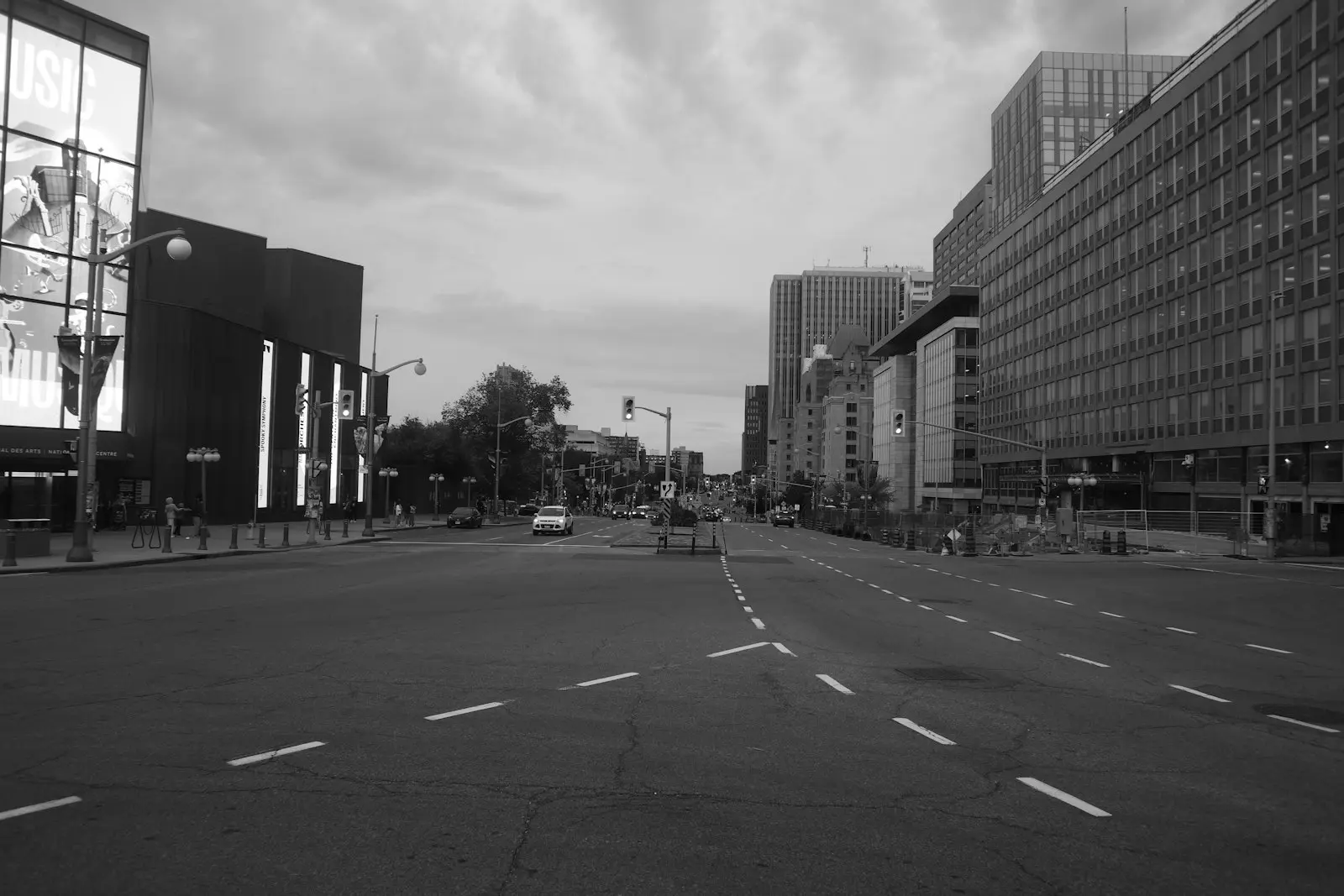
At 35mm the view starts to feel human. It includes context around a subject without the stretched look of an ultra-wide. Street and documentary photographers love it for that reason.
At 50mm, often called a normal lens on full frame, the view is close to how your attention naturally settles on a scene. Nothing looks especially wide or especially compressed.
At 85mm you've crossed into short telephoto. The frame isolates one part of the scene, which is why this range is so popular for portraits.
At 200mm you're picking out details you might not have noticed with your eyes alone. The frame is narrow, the background behind your subject looks big and close, and the tiniest movement of your hands shifts the view.
You don't need to own all these lenses to see it for yourself. The field of view comparison tool shows any two focal lengths side by side, so you can preview the difference before you buy or before you head out.
The Common Focal Length Ranges
Photographers group focal lengths into loose families. The boundaries aren't strict, but the names come up constantly in lens listings and tutorials.
| Range | Focal lengths | What it does | Typical uses |
|---|---|---|---|
| Ultra-wide | below 24mm | Huge views, strong edge stretching, and a lot of foreground | Interiors, big landscapes, dramatic close-up perspectives |
| Wide | 24mm to 35mm | Broad views that still look natural | Landscapes, travel, street, environmental portraits |
| Normal | around 40mm to 60mm | Neutral, unexaggerated framing | Everyday shooting, portraits with context, food |
| Short telephoto | around 70mm to 135mm | Isolates subjects and flatters faces at a comfortable working distance | Portraits and details |
| Telephoto | around 135mm to 300mm | Reaches distant subjects and stacks backgrounds up behind them | Sports, wildlife, landscapes with layered hills |
| Super telephoto | beyond 300mm | Specialist reach | Birds, distant wildlife, the moon |
A lens with a single focal length is called a prime. A lens that covers a range, like 24-70mm or 70-300mm, is a zoom.
Same Subject, Same Size, Different Distances
Now flip the experiment. Instead of standing still, keep your subject the same size in the frame and move your feet each time you change focal length.
Say you're photographing a friend from the chest up. To keep that framing on a full-frame camera, you'd stand roughly here.
| Focal length | Approximate distance for a head-and-shoulders frame |
|---|---|
| 24mm | about 1.3 feet (0.4 meters) |
| 50mm | about 2.7 feet (0.8 meters) |
| 85mm | about 4.7 feet (1.4 meters) |
| 200mm | about 11 feet (3.3 meters) |
Your friend fills the same part of the frame in all four photos, but the pictures look completely different. Every one of those differences comes from the distance. The lens only decides how far back you have to stand.
At 24mm and a foot away, their nose is much closer to the camera than their ears, relative to the total distance, so the nose looks big and the ears shrink. At 200mm and eleven feet back, that same few inches of difference barely matters, so the features look even and flat.
The faces at different focal lengths article shows this effect in detail for portraits, and it's worth reading if you photograph people.
The background changes too. Because a longer lens has a narrower angle of view, it shows a smaller slice of whatever is behind your subject. That small slice gets enlarged to fill the frame, so the background looks bigger and closer, which photographers call compression.
If you want exact numbers for your own lens and subject, the focal length and distance calculator tells you how far to stand for any framing, or which focal length to use from a fixed spot.
Why "Zoom With Your Feet" Is Only Half True
You'll often hear that you can replace a zoom lens by walking closer or backing up. It's useful advice, and it's also incomplete.
Walking closer with a 35mm lens does make your subject bigger, just like zooming in would. But it also changes your position, which changes perspective. The background shrinks relative to the subject, lines converge more steeply, and nearby objects loom larger.
Zooming from your original position, on the other hand, enlarges everything equally. Subject and background grow together, and nothing about the relationships between them changes.
So the two moves produce different photos, and each one is a useful tool for a different look.
The practical habit is to decide where to stand first, then choose the focal length that frames the scene from that spot. Your position sets the perspective, meaning how big the mountain looks behind the hiker or how much the street recedes. The focal length then crops that view to the frame you want.
Beginners often do it the other way around, planting their feet and twisting the zoom ring until the subject fits, which means the perspective is decided by accident.
Try it with any zoom lens. Find a subject with something far behind it, like a person in front of a distant building. Shoot at the wide end from close, then back up and shoot at the long end with the person the same size.
The building will look small and far off in the first frame and big and looming in the second, even though nothing moved except you.
Focal Length and Your Camera's Sensor
The focal length printed on a lens is a physical property of the glass, so a 50mm lens is 50mm on every camera it fits. What changes from camera to camera is how much of the projected image the sensor captures.
Full-frame sensors, roughly the size of a 35mm film frame, are the reference that all those angle-of-view numbers above are based on. Smaller sensors capture only the center of the image, which crops the view and makes the lens behave like a longer one.
- APS-C sensors have a crop factor of about 1.5 (about 1.6 on some brands). A 50mm lens frames like a 75mm to 80mm lens would on full frame.
- Micro Four Thirds sensors have a crop factor of 2. A 25mm lens frames like a 50mm on full frame.
- Phone cameras have tiny sensors and real focal lengths of just a few millimeters, which is why phone makers describe their lenses by full-frame equivalents instead, such as a main camera labeled as 24mm or 26mm.
That's why you'll see the phrase equivalent focal length so often. It translates any lens on any camera into the full-frame terms everyone else uses.
The crop factor calculator does the conversion for your specific sensor, and the FAQ answer on crop factor gives a quick overview.
Focal Length Affects Sharpness and Blur Too
Framing is the main job, but focal length also touches two other things you care about.
Camera Shake
Longer lenses magnify everything, including the tiny wobble of your hands. A shake that's invisible at 24mm can blur a photo at 200mm.
That's where the reciprocal rule comes from, the guideline that your shutter speed should be at least 1 over your focal length, such as 1/200 second at 200mm. On a crop sensor, use the equivalent focal length instead.
The guide to shutter speed for sharp handheld photos explains how to find your own limit, which may be faster or slower than the rule.
Background Blur
At the same aperture and the same distance, a longer focal length gives you a shallower depth of field and a much blurrier background.
Even when you back up to keep the same framing, the long lens still tends to look blurrier behind the subject. It shows a small, enlarged piece of the background, and that enlarged blur reads as softer.
This is why a kit zoom at its long end can give more background separation than at its wide end, even though the aperture is a little smaller there.
Choosing a Focal Length for the Photo You Want
With the mechanics clear, choosing a focal length becomes a question about the photo you want to make.
Do you want to show the place or the subject? Wider focal lengths tell the story of a location and fit a lot in. Longer focal lengths pull one thing out and leave the rest behind.
How close can you get? In a small room, you may need a wide lens just to fit people in. At a soccer field or a wildlife reserve, you may need a long lens because you can't walk onto the pitch or up to the deer.
How should the background look? If you want the background small and far away, get close with a wide lens. If you want it big and looming, back up and use a long one.
Are you photographing a face? For a natural or flattering look, a normal to short telephoto range at a comfortable distance usually works best.
A Ten-Minute Exercise That Makes It Click
Reading about focal length only goes so far. This short exercise builds the instinct.
- Put your zoom lens on and find a scene with a clear subject in the foreground and something interesting far behind it.
- Without moving your feet, take one shot at every marked focal length on your zoom ring. Notice how the whole scene simply crops tighter.
- Now pick a subject and set the lens to its widest. Walk close until the subject fills about a third of the frame and take a shot.
- Zoom to the longest setting and walk backward until the subject is the same size again. Take another shot.
- Put the two photos from steps 3 and 4 side by side and look at the background rather than the subject.
Step 2 shows you what the lens does. Steps 3 to 5 show you what your position does. Most photographers who try this once never confuse the two again.
Key Takeaways
- Treat focal length as a framing and magnification control, where doubling the number roughly doubles subject size and halves the width of the scene.
- Choose your shooting position first to set perspective, then pick the focal length that frames the view from that spot.
- Convert to equivalent focal length when your camera has a crop sensor, so that framing advice written for full frame applies to your lens.
- Raise your shutter speed as you zoom longer, because long focal lengths magnify camera shake along with the subject.