Pick a zoom when your position is fixed or your subjects keep changing, and a prime when you can move freely. A fast prime suits indoor and night shooting, since f/1.8 gives about three stops more light than a kit zoom at f/5.6. Primes are smaller and lighter, and zooms save you from changing lenses.
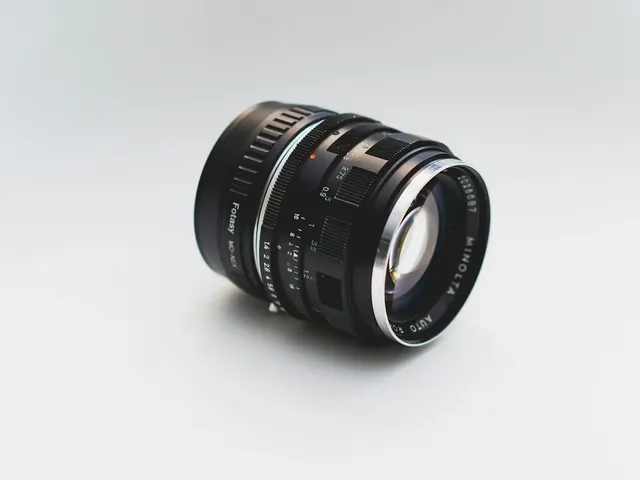
A prime lens has one fixed focal length, like 35mm or 50mm, while a zoom lens covers a range, like 18-55mm or 70-300mm. In general, primes give you more light and a smaller, lighter lens, and zooms give you flexibility without changing lenses.
Neither is better in the abstract. The right one depends on how you shoot, and three questions settle it.
- How much do you move around?
- How much light do you usually have?
- What kind of subjects do you point the camera at?
Most prime vs zoom comparisons stop at a list of pros and cons, which leaves you exactly where you started. This guide works through those three questions instead, then ends with a concrete "which one first" pick for three common types of beginner.
It's part of the lenses guide, and if focal length itself still feels fuzzy, start with focal length explained and come back.
What Actually Differs Between the Two
Before the decision, here's what you're really choosing between, stripped of marketing.
Focal length flexibility. A zoom lets you reframe without moving, while a prime makes you move your feet or accept the framing you have. This is the single biggest practical difference.
Maximum aperture. Affordable primes commonly open to f/1.8, and many open to f/1.4. Affordable zooms commonly open to f/3.5 at the wide end and f/5.6 at the long end. Professional zooms reach f/2.8, but they're large and heavy.
That gap in aperture is the second biggest difference, and it affects both low light and background blur, which you can see for any two lenses with a side-by-side lens comparison.
Size and weight. A normal prime like a 35mm or 50mm f/1.8 is often small enough to fit in a jacket pocket, and a zoom that matches its aperture across a range would be several times the size. Telephoto primes are the exception, since long, fast primes are big no matter what.
Image quality. Primes were once clearly sharper, because a lens designed for one focal length has fewer compromises. Good modern zooms have narrowed that gap a lot.
For most beginners, sharpness differences between a decent prime and a decent zoom are smaller than the differences caused by technique, focus, and shutter speed.
Cost. A basic fast normal prime is usually one of the least expensive lenses in any system. Fast zooms are usually among the most expensive.
If the glossary entries for prime lens and zoom lens help, keep them handy. The next three sections cover the questions that actually decide it.
How Much Do You Move Around?
Think about the last few times you took photos and where you were standing.
If you can usually walk closer, step back, or shift sideways freely, a prime works well. Street photography, portraits of friends, travel walks through a town, and photos around the house all give you room to move.
The fixed focal length becomes a creative constraint that pushes you to think about where to stand, which often improves composition. The one lens challenge described in the gear trap article exists for exactly this reason.
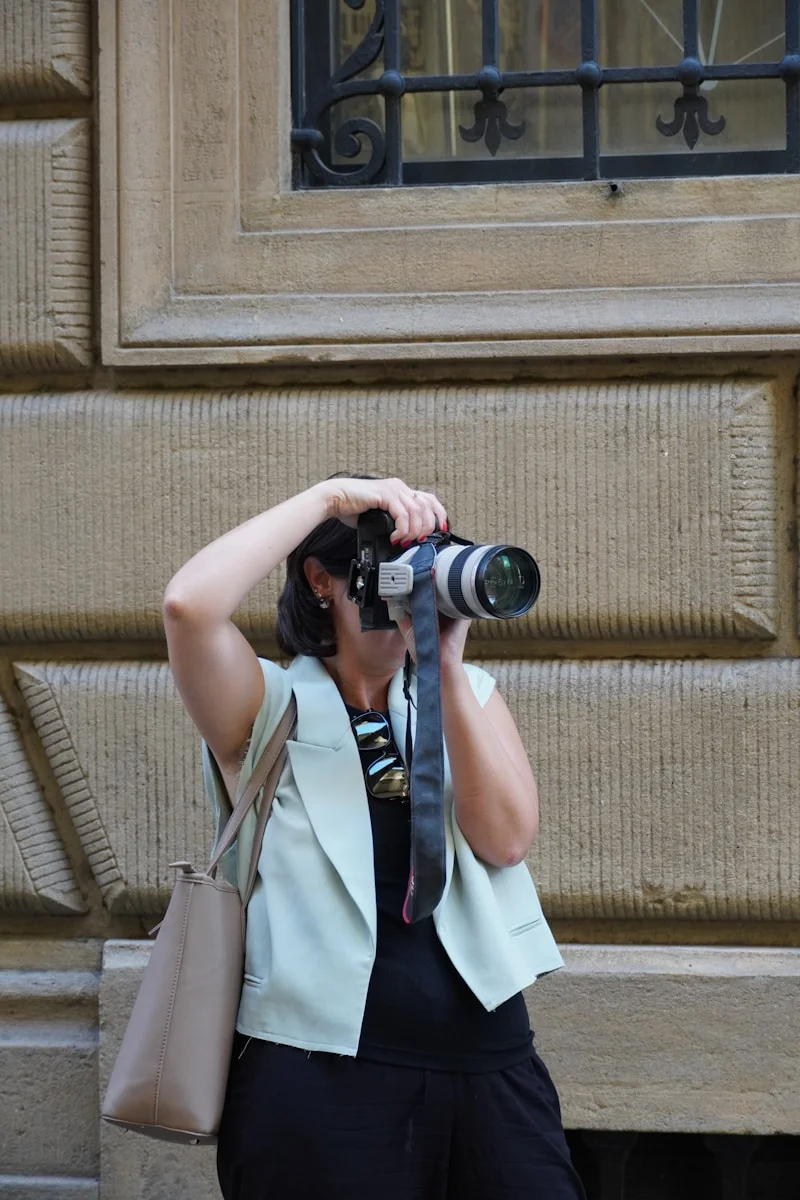
If your position is often fixed, a zoom is the better tool. Sitting in the stands at a game, standing at the edge of a cliff, shooting a school play from your seat, or photographing a wedding ceremony from the aisle all leave you stuck in one spot. A prime in those situations means you get one framing or nothing.
There's a subtle middle case, where you can move but moving changes the scene. Kids stop playing when you walk up to them, wildlife flees, and a conversation at a dinner table changes when you stand up. A zoom lets you reframe without disturbing the moment, which can matter more than any technical advantage a prime offers.
Zooming and walking are also not identical. Walking closer changes your perspective, while zooming from a fixed spot only crops the view.
A prime forces you to make perspective choices deliberately, and a zoom makes it easy to never think about them. That can be good or bad, depending on whether you're trying to learn or just trying to get the shot.
How Much Light Do You Usually Have?
This is where primes often win outright.
A typical kit zoom at its long end opens to f/5.6, and a typical normal prime opens to f/1.8. That difference is a little over three stops, which means the prime lets in roughly nine to ten times as much light.
Here's what that means in a dim living room at night.
| Lens | Aperture | Shutter speed | ISO |
|---|---|---|---|
| Kit zoom at the long end | f/5.6 | 1/60 | 6400 |
| Fast prime | f/1.8 | 1/60 | 640 |
| Fast prime, keeping ISO 6400 | f/1.8 | about 1/500 | 6400 |
The room and its brightness are identical in all three rows. The prime lets you either drop the ISO by more than three stops for a much cleaner file, or keep the ISO and use a far faster shutter speed to freeze a moving child.
If most of your photos happen indoors, in the evening, or anywhere the light is poor, that advantage is huge. The guide to indoor low light photography shows what to do with all that extra light.
If you mostly shoot outdoors in daylight, the gap barely matters. On a sunny afternoon a kit zoom at f/5.6 has light to spare, and you'd be stopping a prime down anyway.
The Background Blur Side of Aperture
The wide aperture of a prime also gives you much shallower depth of field. At f/1.8 you can blur a background into soft shapes that a kit zoom at f/5.6 simply can't match at the same framing. The aperture guide explains why the f-number has such a big effect on what's sharp.
Zooms can still produce background blur, just in a different way. Use the long end, get close to your subject, and put the background far behind them.
A telephoto zoom at 200mm and f/5.6 can blur a background beautifully. It needs space to do it, though, so it won't help in a small room.
What Do You Photograph Most?
Some subjects lean strongly toward one type of lens.
| Leans prime | Leans zoom | Works either way |
|---|---|---|
| Portraits | Sports | Landscapes from places you can walk around in |
| Street photography | Wildlife and birds | Architecture |
| Food | Travel where you change scenes quickly | General family photos in good light |
| Everyday life at home | Hiking where you can't change lenses easily | |
| Low-light events | Events where you can't move | |
| Anything where you want shallow depth of field | Landscapes you fine-tune from a fixed viewpoint |
The prime subjects let you control distance and reward fast apertures. The zoom subjects either keep you in one place or keep changing in front of you.
Portraits deserve one more note, because people often pick focal length for faces by accident. A zoom set to its wide end and held close makes noses look large, while a short telephoto from a few steps back flatters most faces.
Whichever lens you use, the faces at different focal lengths article explains what distance does to a face, and the focal length and distance calculator tells you how far to stand for the framing you want.
The Hidden Costs of Each
Every choice has a downside that the spec sheet doesn't mention.
Hidden Costs of Primes
- Lens changes. If you own several primes, you'll swap lenses often. That takes time, risks missing moments, and invites dust onto the sensor.
- Missed framings. Sometimes you physically can't get the shot, because the right spot to stand is in a river or behind a fence.
- Thin focus. At f/1.8, depth of field is very shallow up close. Beginners often get a sharp ear and a soft eye until they learn to stop down a little or nail their focus point.
Hidden Costs of Zooms
- Weight. Bright zooms are heavy, and a heavy camera is one you leave at home.
- Less light. Affordable zooms make you raise ISO sooner indoors.
- Lazy framing. It's easy to stand in the first spot you arrive at and twist the ring until things fit, instead of finding a better position. The habit is yours to break, and the zoom ring just makes it easy to fall into.
Optical Zoom, Digital Zoom, and Cropping
One quick clarification, since it confuses many people coming from phones. On a dedicated camera, zooming the lens is optical, which means the glass moves and magnifies the image with no loss of quality. Phones mix optical and digital zoom, and digital zoom is just cropping and enlarging.
The FAQ on optical vs digital zoom covers the difference.
That matters for primes because cropping is a legitimate way to "zoom" a prime after the fact. A 35mm photo cropped moderately can stand in for a slightly longer lens, as long as you don't need the full resolution.
It won't change perspective, and it costs pixels, but it narrows the flexibility gap more than people expect.
Test a Prime With the Zoom You Already Own
You can find out whether prime shooting suits you before spending anything. Set your kit zoom to a single focal length, such as 35mm on an APS-C camera or 50mm on full frame, and put a small piece of tape across the zoom ring so it can't move. Then shoot that way for a week.
Pay attention to two things.
- How often you feel genuinely stuck, unable to get a shot you wanted because you couldn't step closer or farther away.
- How often the fixed framing pushed you to find a better angle you wouldn't otherwise have tried.
If the second happens more than the first, a prime will probably make you happier. If you spend the week frustrated and missing shots, your kind of photography needs a zoom.
This test can't show you the extra light of a fast prime, since your kit lens still has its usual aperture. It only tests the fixed framing, which is the part most people worry about.
Which One First? Three Beginner Profiles
Find the description below that sounds most like you.
The Indoor Family Photographer
You mostly photograph kids, pets, partners, and friends at home, at gatherings, and in the evening. Your photos come out blurry or grainy, and the backgrounds are cluttered with furniture.
Start with a fast normal prime. A 50mm f/1.8 on a full-frame camera, or a 35mm f/1.8 on an APS-C camera, gives you a natural field of view and roughly three stops more light than your kit lens at its long end.
It will change your indoor photos more than any other single purchase. Keep your kit zoom for daylight outings.
The Traveler and Hiker
You photograph places, such as cities, mountains, coastlines, and markets, along with the people you meet along the way. You change scenes constantly and can't stop to swap lenses on a trail.
Start with a zoom, and maybe the one you already have. A standard zoom covering wide to short telephoto handles almost everything you'll see. The flexibility outweighs the light advantage of a prime, because most travel happens in daylight.
If you eventually add a lens, a small fast prime for evenings and restaurants is a great companion that barely adds weight.
The Sports and Wildlife Parent
You photograph your kids' games, the birds in the backyard, or animals at the park. Your subjects are far away, and you can't walk onto the field.
Start with a telephoto zoom. Something reaching 200mm or 300mm gets you onto the field without leaving your seat.
The trade-off is light, since these lenses are usually f/5.6 at the long end, so they shine in daylight and struggle in dim gyms. That's a genuine limitation, and it's worth knowing before you buy. Still, a prime simply can't do this job at a beginner's budget.
Buying Without Falling Into the Gear Trap
Whatever you choose, be specific about the problem first. "I want better photos" isn't a lens problem, but these are.
- "My indoor photos of my kids are always blurry" has a clear answer in a fast prime.
- "I can never fill the frame at my daughter's soccer games" has a clear answer in a telephoto zoom.
Then use the lens you buy for a while before buying another. One lens used constantly teaches you more than four lenses used occasionally.
Key Takeaways
- Pick a zoom when your position is fixed or your subjects keep changing, and a prime when you can move freely.
- Choose a fast prime if you shoot mostly indoors or at night, since f/1.8 gives you about three stops more light than a typical kit zoom at the long end.
- Match the lens to a specific problem you can name, such as blurry indoor photos or distant subjects, before you buy.
- Practice moving your feet to change perspective, whichever lens you own, instead of letting the zoom ring decide where you stand.