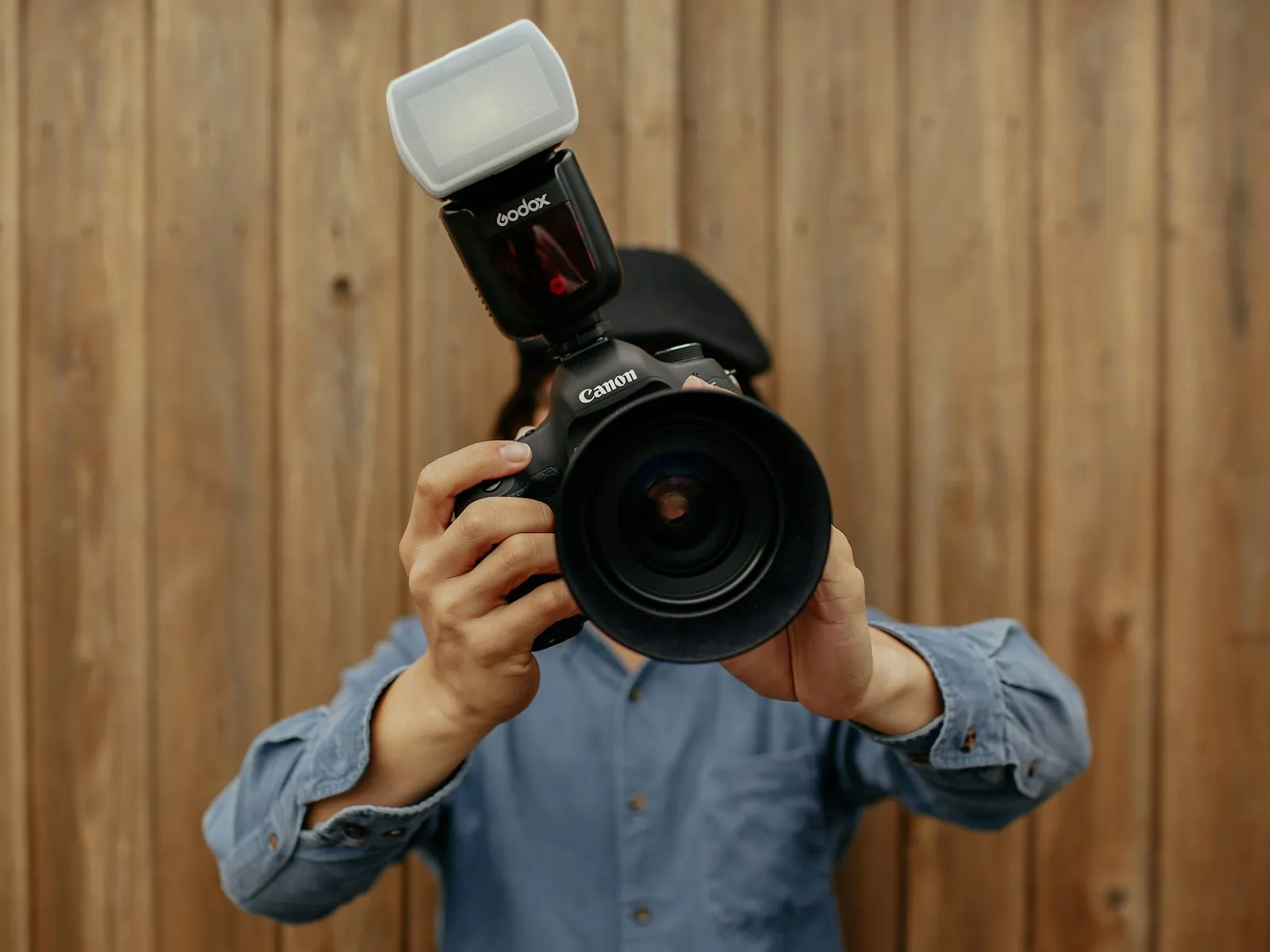
Use TTL when the distance between you and your subject keeps changing. Use manual when it doesn't. That single sentence settles most of this debate before it starts.
TTL flash meters the scene through the lens and chooses a power level for you, recalculating before every frame. Manual flash fires at exactly the power you set, every time, until you change it. One adapts. One repeats. Neither is more professional than the other, and photographers who insist otherwise are usually defending a habit, not a principle.
This decision sits near the center of this guide because it shapes everything else you do with a flash, from how fast you work a reception to how repeatable your product shots are. What follows is how each mode decides on power, where each fails, and the hybrid workflow most photographers settle into.
How TTL Flash Actually Works
TTL stands for through the lens, and the name describes the mechanism. Before every exposure, the flash and the camera have a fast conversation:
- You press the shutter. Before it opens, the flash fires a low-power preflash.
- That preflash travels to your subject, bounces off it, and comes back through the lens.
- The camera's meter reads the returning light and calculates how much power the main flash needs.
- The shutter opens and the flash fires at that calculated power.
The whole sequence takes milliseconds. To your eye, the preflash and the main flash blur into a single burst, which is why most people never notice that their flash fires twice.
The brain running this calculation is the same one you already use for available light. If you understand how your camera's light meter works, you already understand TTL. It's reflective metering with the same goal, averaging the scene toward middle gray, applied to flash output instead of shutter speed or aperture. The flash becomes one more exposure variable the camera adjusts automatically, on top of whatever ambient light is already in the room.
Why TTL Exposures Vary From Frame to Frame
TTL's defining strength is that it remeters every single frame. That's also its defining weakness, because it can change its mind every single frame.
The meter assumes middle gray. Fill the frame with a bride in white and the meter sees an abundance of reflected light, so it cuts flash power and the dress drifts toward muddy gray. Swing over to the groom in a black suit and the meter sees darkness, pumps the power up, and washes the suit out. These are the same failures that plague ambient metering, the ones covered in why your photos are too dark or too bright. TTL inherits all of them.
Composition changes the math. Recompose slightly so a dark doorway enters the frame and the meter compensates, brightening your subject. Two nearly identical frames, shot seconds apart, can come back noticeably different because the background shifted.
Reflective surfaces lie. Mirrors, windows, glossy tile, and sequined dresses throw the preflash straight back at the camera. The meter reads that as plenty of light and strangles the output, leaving your actual subject underexposed.
None of this makes TTL bad. It makes TTL a system with known biases, and known biases can be corrected.
Flash Exposure Compensation Is the Steering Wheel
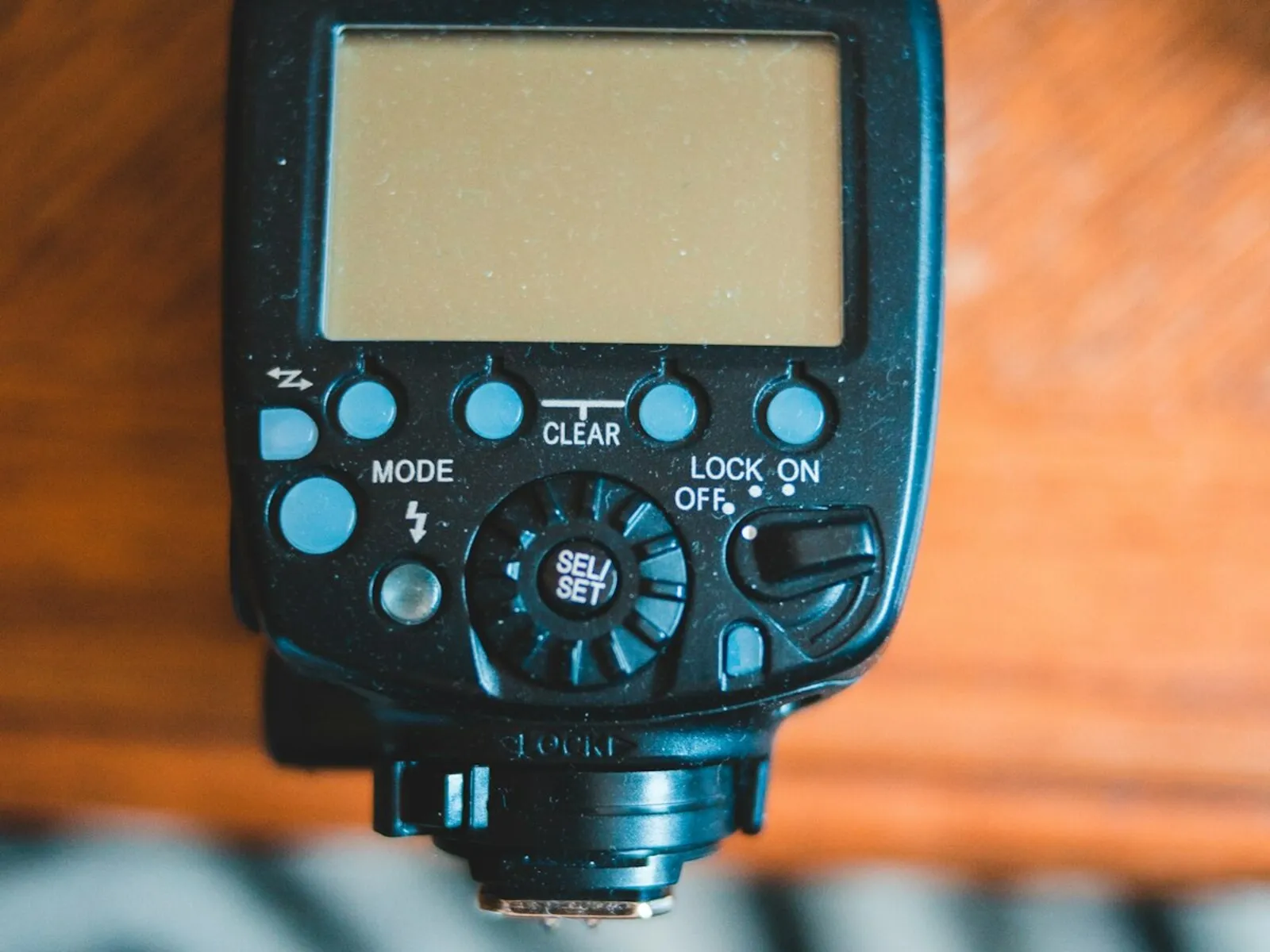
You correct TTL the same way you correct ambient metering, with a compensation dial. Flash exposure compensation (FEC) tells the camera to add or subtract from whatever power TTL calculates, usually in third-stop increments up to two or three stops in either direction. It's separate from regular exposure compensation, set on the camera body or on the flash itself.
The corrections follow the meter's biases:
- Bright subject filling the frame, like a white dress or a snowy scene? Dial in +1 FEC so the whites stay white.
- Dark subject filling the frame, like a black suit or dark wood paneling? Dial in -1 FEC so the blacks stay black.
- Flash looking too obvious in daylight? Dial -1 to -2 FEC and the flash drops to a whisper.
You're not fighting TTL when you do this. You're correcting its one assumption, the middle gray average. A TTL flash with your thumb on the FEC dial is a fast, accurate system.
How Manual Flash Power Works
Manual flash is a metronome. It does exactly the same thing on every frame, and that stubborn repetition is the entire point.
Set a speedlight to manual and you choose a power fraction. Full power is 1/1, then the scale steps down through 1/2, 1/4, 1/8, 1/16, 1/32, 1/64, and on most flashes 1/128. Each halving cuts the light by exactly one stop. Dropping from 1/4 to 1/8 power has the same one-stop effect as closing your aperture from f/5.6 to f/8.
There's no preflash, no metering, no opinion. The flash doesn't know whether your subject is wearing white or black, and it doesn't care. If the subject, the flash position, the aperture, and the ISO all stay put, frame fifty is exposed identically to frame one.
Two practical notes. Full power drains batteries and can take several seconds to recycle, so a flash at 1/1 misses moments while it recharges; at 1/8 or 1/16 it recycles almost instantly. And because manual skips the preflash, blink-prone subjects keep their eyes open more often. Some people reliably blink at the preflash and have their eyes closed when the main flash fires.
When TTL Wins
TTL earns its keep whenever the situation refuses to hold still.
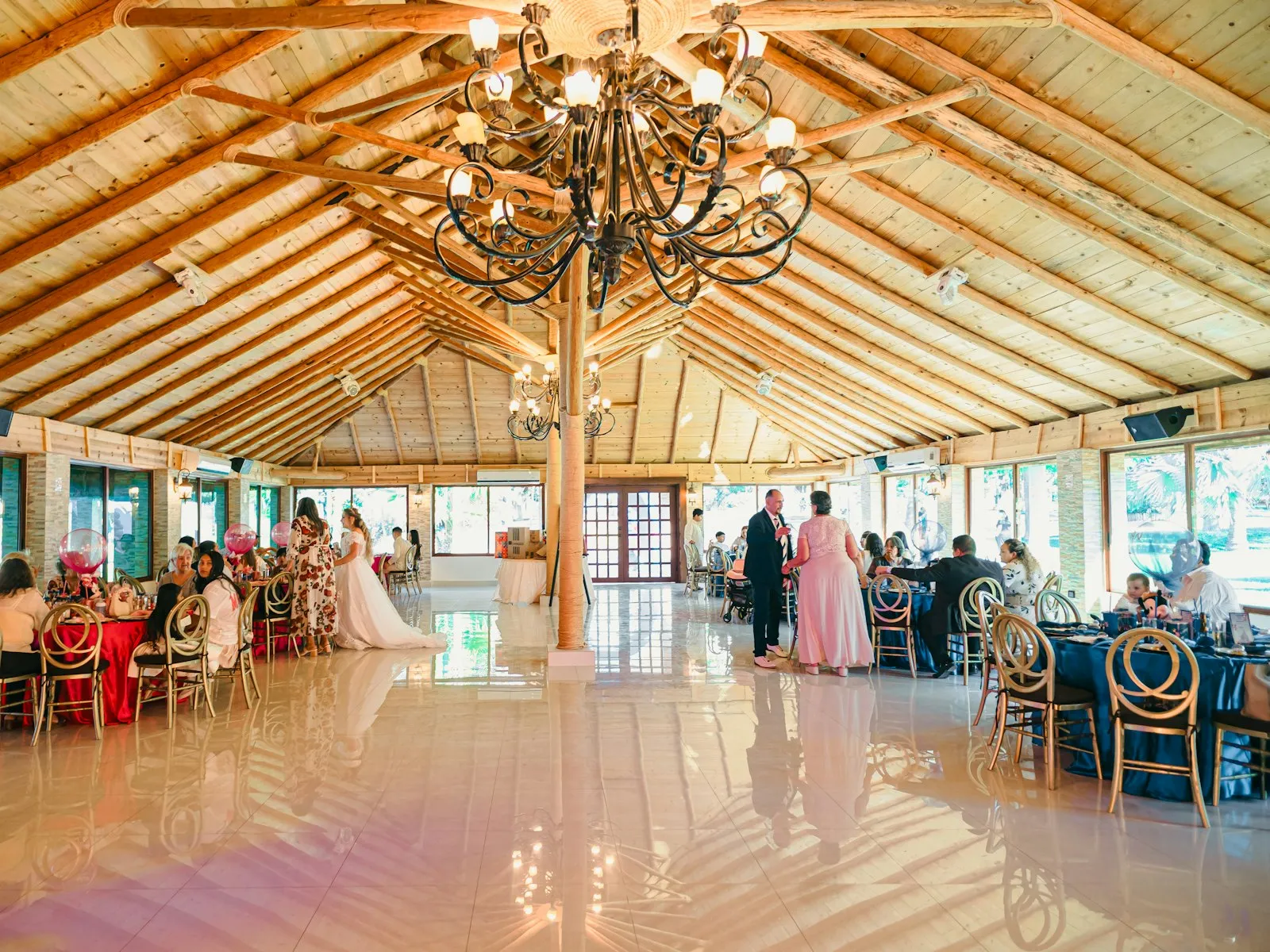
Events and receptions. You photograph a couple at three meters, then a table of guests at five, then a hug at arm's length. Every distance change would demand a manual power change, and nobody can do that math while watching for moments. TTL absorbs it silently.
Moving subjects. Kids, pets, dancers, anyone closing the distance toward your lens. By the time you've adjusted manual power for where they were, they're somewhere else.
Bounce surfaces that keep changing. Walk through a venue bouncing flash off ceilings and walls and the light path changes constantly. A low white ceiling here, a higher beige one there. TTL meters the light that actually arrives, however it got there, and adjusts.
Quick fill in daylight. Outdoor portraits with fill flash are fastest in TTL. Set -1 FEC, shoot, and the flash quietly lifts the shadows under eyes and chins without any power management.
The common thread is changing distance. TTL is distance-proof because the preflash measures the actual light path on every frame.
When Manual Wins
Manual earns its keep whenever the situation does hold still.
Static portrait setups. Subject on a mark, flash on a stand, both staying put. Nothing changes, so there's nothing to remeter. Dial in the power once and spend your attention on expression and posing instead of exposure.
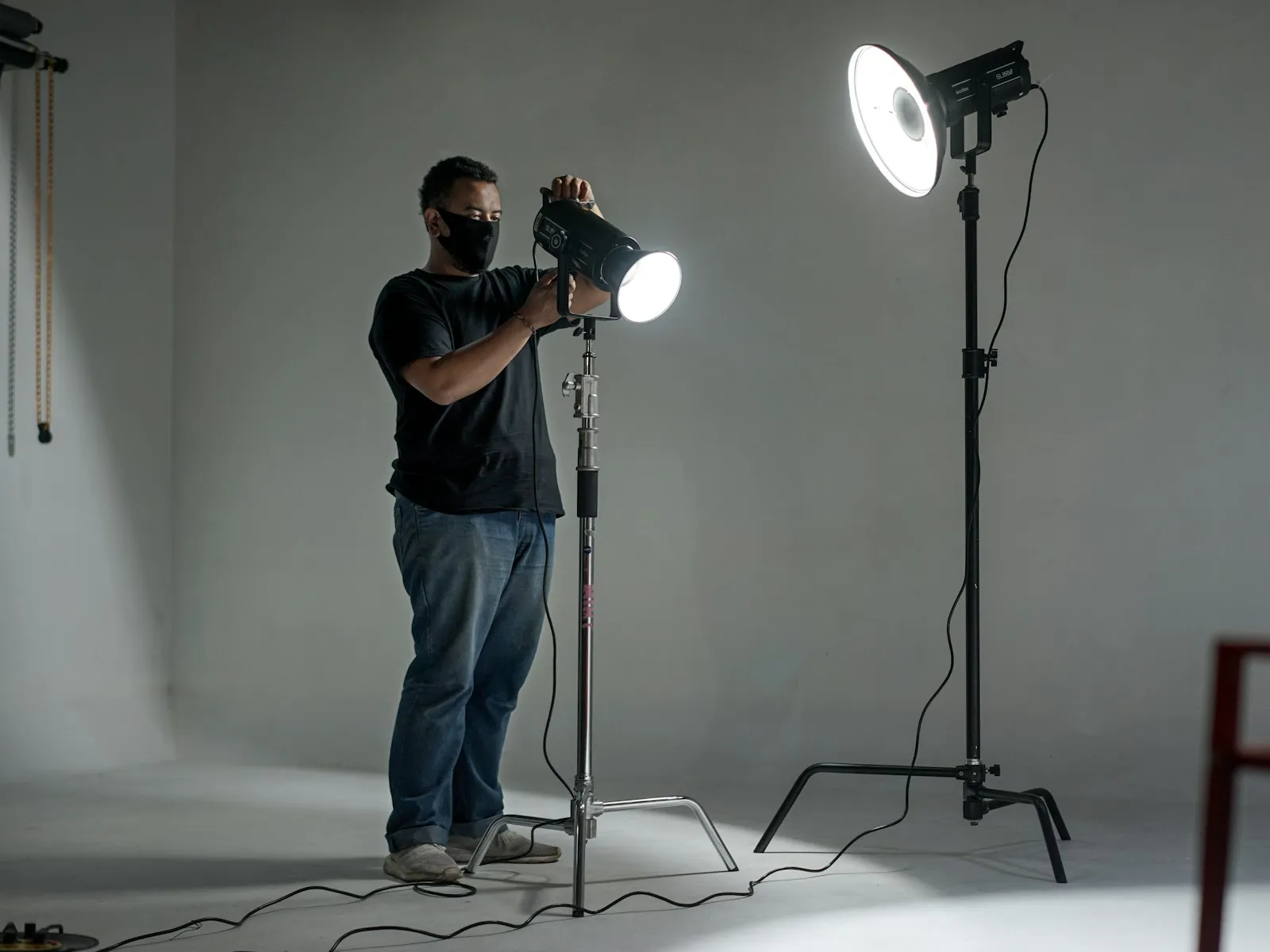
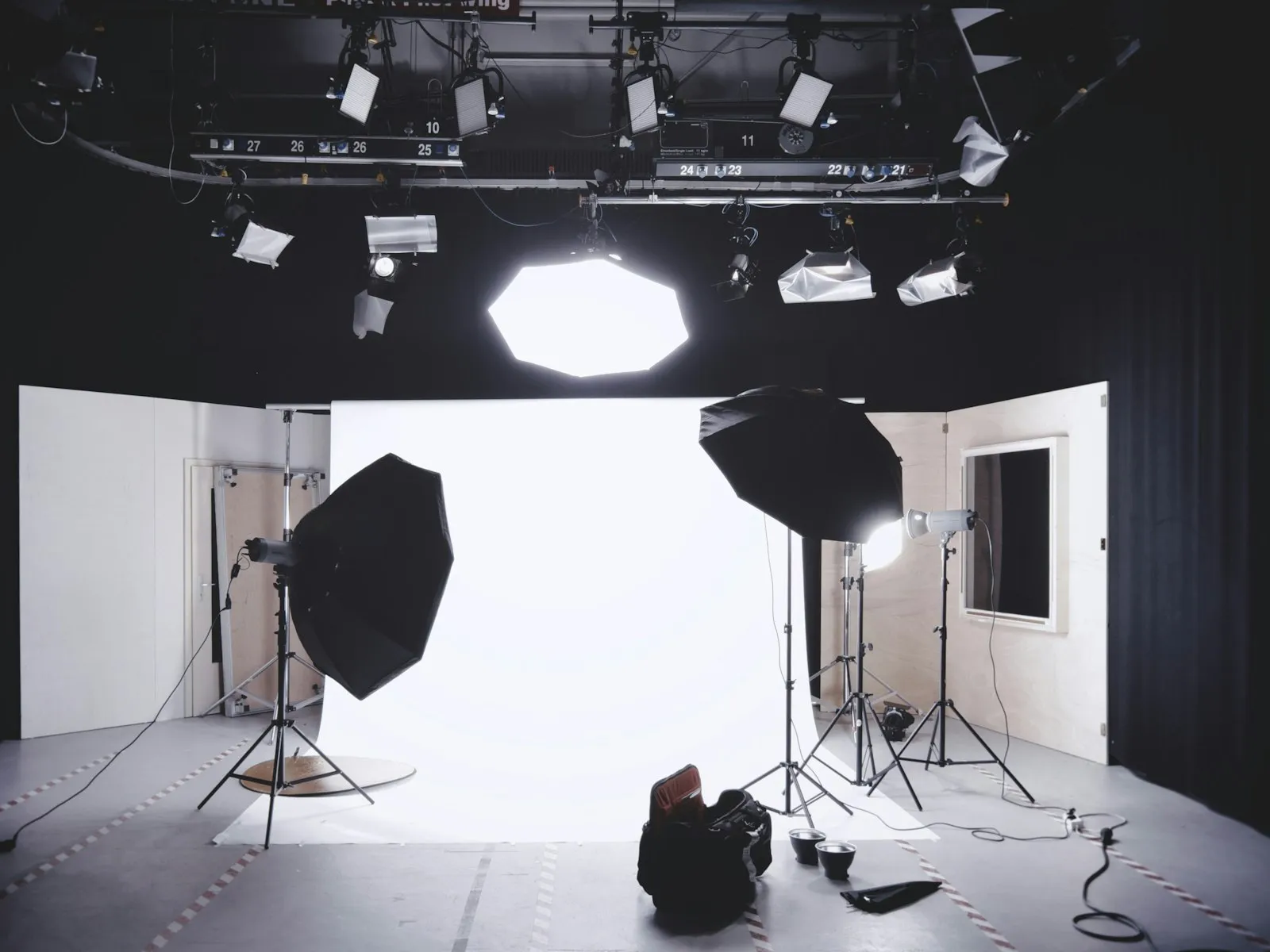
Off-camera work. This is the big one. Take the flash off the camera and manual becomes the natural default, which is why it dominates off-camera flash work. The flash-to-subject distance is fixed by the light stand, not by where you wander with the camera, so the correct power does not change as you move. Manual radio triggers are also cheaper and simpler than TTL-capable ones.
Product and repeat work. A hundred products on the same table need a hundred identical exposures. Manual delivers that, and one edit in Lightroom applies cleanly across the batch.
Multiple flashes. The ratio between a key light and a rim light should stay locked. TTL juggling several flashes at once gets unpredictable fast, while manual ratios hold forever.
The Hybrid Workflow Most Photographers Land On
Almost nobody stays purely on one side. The pattern that emerges after a few years of shooting looks like this: TTL when the camera and subject are moving relative to each other, manual when they're not.
A wedding photographer runs TTL bounce flash all through the reception, then switches the same flash to manual the moment it goes on a stand for formal portraits. A product photographer lives in manual all day, then flips to TTL for the behind-the-scenes candids.
There's also a bridge between the modes. Shoot a test frame in TTL, and if it looks right, switch to manual at the equivalent power to lock in what TTL discovered. Some cameras formalize this with a flash value lock that meters once and holds the power across frames.
My take is that the TTL versus manual argument is really a distance argument wearing a costume. Ask whether the flash-to-subject distance will change between frames. If yes, TTL. If no, manual. Nearly every scenario resolves under that one question.
Guide Numbers and the Physics Underneath
Both modes answer the same physics question. How much light does it take to expose this subject at this distance, aperture, and ISO? TTL answers with a preflash. Manual makes you answer. Either way, two facts govern the answer.
The first is the guide number, the standard measure of flash power. A guide number is distance multiplied by f-number at ISO 100. A flash with a guide number of 36 (in meters) can correctly expose a subject 4.5 meters away at f/8 and ISO 100, because 4.5 times 8 is 36. Bigger number, more powerful flash.
The second is light falloff. Flash obeys the inverse square law, so doubling the distance to your subject quarters the light, a loss of two full stops. This is why TTL power swings so much at events; small distance changes have outsized effects.
The complete picture lives in how flash exposure works, and the flash exposure calculator does the arithmetic for you, giving the required power for any distance or the maximum range at a given aperture and ISO.
One boundary worth knowing. Flash power controls the flash's share of the exposure, while shutter speed controls the ambient share, as long as you stay under your camera's sync speed, around 1/200 to 1/250 on most bodies. Push past that with high-speed sync and you pay a steep price in flash power. The full two-exposures-in-one-frame idea lives in balancing flash with ambient light.
A Starting Point for Each Mode
Neither mode requires courage, just a starting recipe and a willingness to adjust.
For TTL on camera:
- Set the camera to manual exposure. Indoors, try f/4, ISO 800, and 1/200 second as a baseline.
- Set the flash to TTL and take a frame.
- Judge the subject, not the whole image. If skin tones look dim or hot, dial FEC up or down in third stops.
- Reset FEC toward zero when the scene changes character. The correction for a white dress is wrong for a dark suit.
For manual flash:
- Start at 1/16 power indoors with the same baseline camera settings.
- Take a test frame. Too dark? Double the power or open the aperture a stop. Too bright? Halve the power.
- When it looks right, stop touching it. That's the whole discipline of manual flash.
- Retest only when something physical changes, like moving the flash, the subject, or the aperture.
Ten test frames into manual flash, the fear evaporates. The power scale is just stops, and you already think in stops.
Stop Treating the Choice as an Identity
Some photographers treat manual flash as a badge of seriousness and TTL as training wheels. That framing fails in both directions. TTL at a fast-moving reception is the more skilled choice because it frees your attention for moments. Manual on a locked-down product set is the more skilled choice because consistency is the job.
The mode is a tool matched to a situation, exactly like autofocus versus manual focus. Learn both, ask the distance question, and switch without ceremony.
Key Takeaways
- Use TTL when flash-to-subject distance keeps changing, like events and receptions, and let the preflash recalculate power for every frame.
- Switch to manual flash for static setups and off-camera work, since a fixed power fraction delivers identical exposures frame after frame.
- Dial flash exposure compensation to correct TTL when bright or dark subjects fool the meter, just as you would for ambient metering.
- Remember each halving of manual power, from 1/1 down to 1/128, cuts the light by exactly one stop.
More in This Guide
Continue building your flash skills.